
From Novel to AI Animation: Sisi Tesser Joins Toronto’s AI & Film Forum During Festival Week

From Novel to AI Animation: Sisi Tesser Joins Toronto’s AI & Film Forum During Festival Week
Creator of The Lavender Girl shares a real-world perspective on authorship, AI-assisted filmmaking and the future of independent production
TORONTO — September 2026 — Canadian novelist, producer and filmmaker Sisi Tesser joined filmmakers, performers, technologists and creative-industry professionals at the AI & Film Forum in Toronto on September 14, 2026, taking part in Panel Two, “Future Film: From Prompt to Production.”
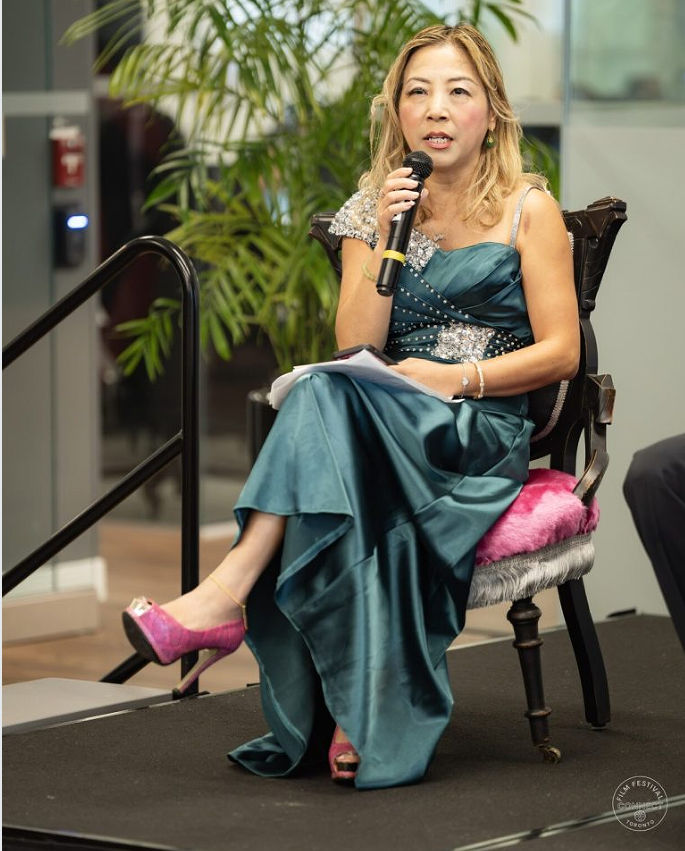
Presented during Toronto’s busy international film festival week, the forum brought together three panels examining how artificial intelligence is changing filmmaking — from performance and ethics to story development, production, music, intellectual property and creative responsibility.
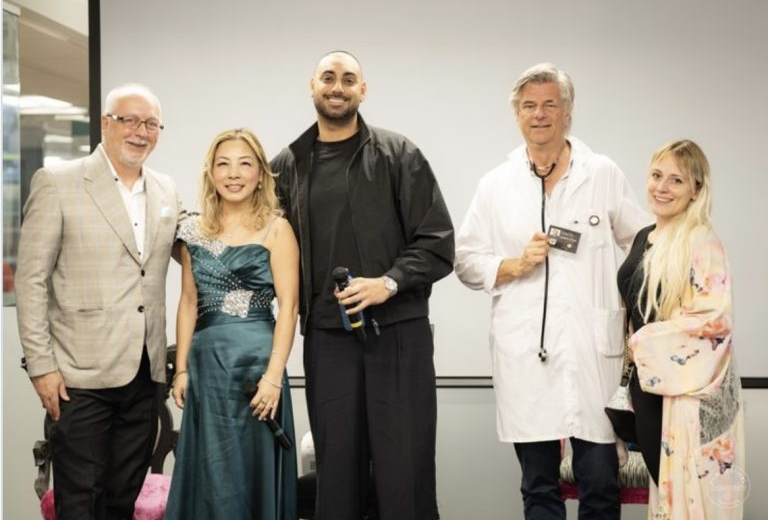
Tesser joined Gordon Weiske and Jay Gogna for Panel Two, moderated by Katisha Shaw.
The central question was both practical and increasingly urgent:
How can filmmakers use AI to expand what they can create without surrendering authorship, originality or judgment?
From Story to Screen
Panel Two followed the life of a creative idea — beginning with story development, moving through production, and continuing into music, rights, ownership and the value of creative assets.
Tesser brought a particularly practical perspective to the conversation.
As the original creator of the science-fiction property The Lavender Girl, she has taken her own story from an English-language novel into a ten-episode AI-assisted animated series and a separate cinematic Festival Version.
Her experience allowed the discussion to move beyond theory and into the realities of actually producing a narrative project with emerging technology.
“AI can help us realize images that may once have been financially or technically out of reach,” Tesser said. “But the story, the characters, the emotional meaning and the final creative judgment still have to belong to the creator.”
For Tesser, that distinction is fundamental.

Technology may accelerate parts of production, but it cannot decide why a story deserves to exist.
AI Filmmaking Is Not Necessarily Cheap Filmmaking
Tesser also challenged one of the common assumptions surrounding generative filmmaking: that AI automatically makes production inexpensive.
Drawing on her own production experience with The Lavender Girl, she told attendees that when she began the project roughly six months earlier, premium AI animation services she encountered in the market could cost approximately RMB 20,000 per finished minute.
At scale, the economics change quickly.
Character consistency, visual development, shot generation, revision, editing, music, sound and post-production can still require significant investment and extensive human direction.
Her message was simple: AI can change what an independent creator is capable of producing, but serious AI-assisted filmmaking still requires time, money, taste and creative supervision.
When English Is Your Fourth Language
The day also produced an unexpected opportunity.
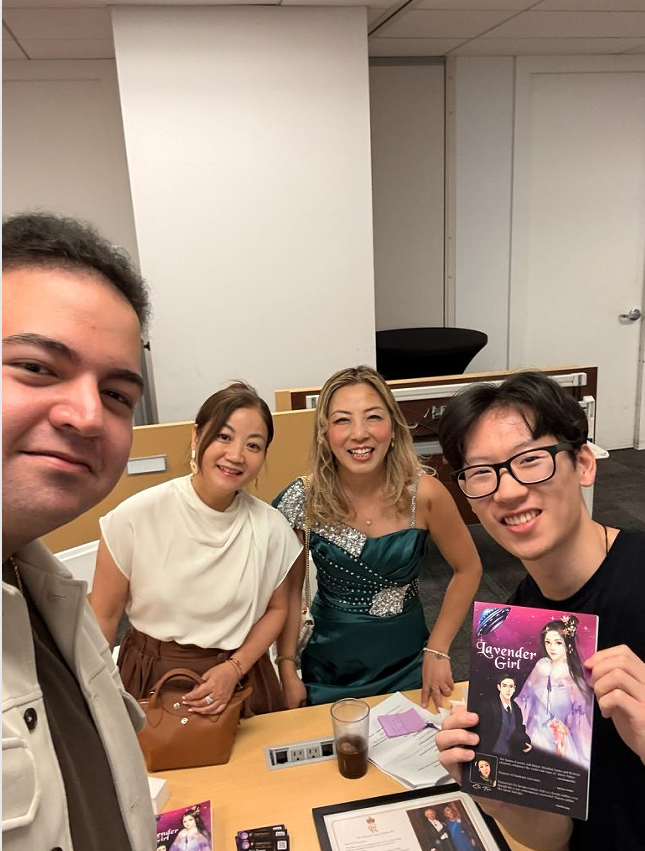
Organizers provided Tesser with a booth where she displayed her three English-language novels, information about The Lavender Girl, approximately 200 business cards, her official website and materials connected to the project’s world premiere.
Among the materials on display was a congratulatory message received in connection with the premiere from King Charles III and Queen Camilla.
The booth became a conversation point throughout the forum.
Several visitors were particularly surprised to learn that English is Tesser’s fourth language.
One question came up repeatedly:
How did you write novels in English when English was not your first language?
Another visitor asked what language a writer should choose if English is not their native tongue.
Tesser’s advice was straightforward:
“Write first in the language in which you can most honestly express the story. If you are Spanish, there is nothing wrong with publishing the Spanish version first. The important thing is to tell the story.”

For Tesser, language should be a bridge to an audience, not a reason to stop creating.
The Lavender Girl as a Real-World AI Production Case Study
The Lavender Girl began as Tesser’s original science-fiction novel and later evolved into an AI-assisted animated project.
Season One consists of ten episodes, followed by a separate horizontal Festival Version developed for screenings, professional presentation and festival-oriented use.
The project also became a useful case study for the panel’s larger discussion about adaptation.
Moving from novel to screen has always required translation: an idea becomes language, language becomes scenes, and scenes become performances, images, sound and rhythm.
AI introduces another layer to that translation.
The key question, Tesser argued, is not whether technology participates in that process, but who remains responsible for the final creative decisions.
“Technology can accelerate the journey,” she said, “but it cannot replace knowing why you are telling the story.”
Early Audience Response
Following the project’s recent distribution activity, Tesser said The Lavender Girl reached approximately 103,000 views within less than a week and a half on TikTok-related distribution.
For an independently developed Canadian original property moving from novel to AI animation, the early response has been encouraging.
It also gave Tesser an additional real-world perspective to bring into the forum: AI tools may help create content, but audiences ultimately determine whether a story connects.
A Forum Focused on Human Responsibility
The AI & Film Forum was structured around three conversations.
Panel One, “AI and the Human Future of Film,” examined performance, identity, ethics and trust in the age of synthetic media.
Panel Two, “Future Film: From Prompt to Production,” focused on how AI fits into story development and production while human filmmakers retain authorship and judgment.
Panel Three brought the conversation into the working environment of a film set, examining automation, safety and human accountability.
Across the program, one question returned repeatedly:
What should filmmakers never surrender completely to an AI system?
For Panel Two, the answer was less about rejecting technology than about defining responsibility.
AI may function as a collaborator, diagnostic tool or accelerator.
But taste, meaning, ethics and authorship still require a human being willing to stand behind the work.
Following the event, the organizers created a private 36-image Panel Two gallery featuring the discussion, audience moments and portraits of Katisha Shaw, Gordon Weiske, Sisi Tesser and Jay Gogna.
Forum organizer Richard J. Railey later thanked the moderators and panellists for contributing their time, experience and ideas during an exceptionally busy festival week.
From AI & Film to Film & Finance
The conversation continued beyond the forum.
Later that afternoon, Tesser attended the Film & Finance Mixer at King Taps in downtown Toronto, a sold-out industry gathering connecting professionals across filmmaking, finance and creative entrepreneurship.
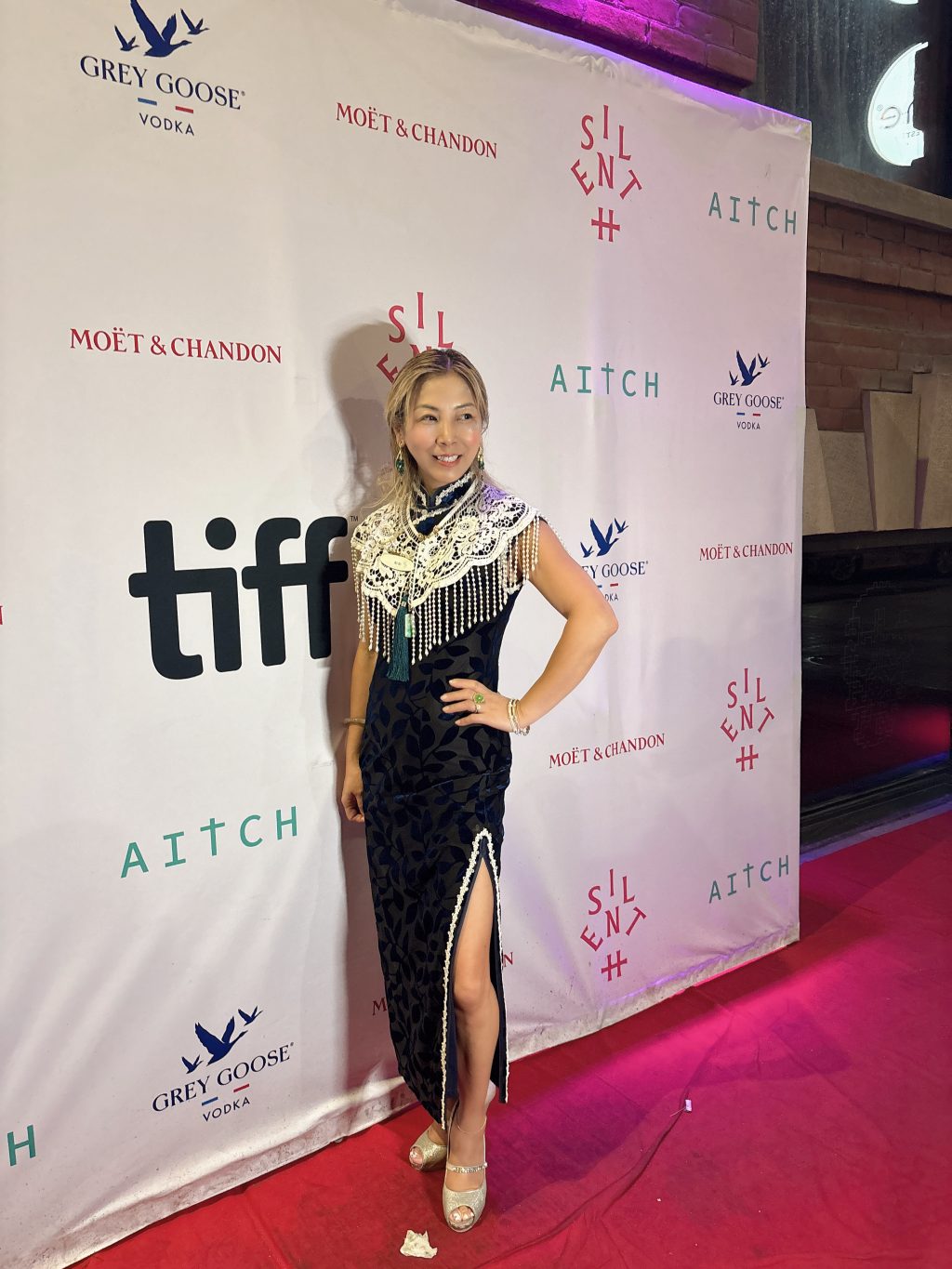
The following evening, September 15, she joined members of Toronto’s film community at an industry afterparty at Silent H on King Street West, continuing conversations and new connections formed during the week.
For Tesser, the timing was unexpected.
She had initially assumed that her schedule following The Lavender Girl world premiere would leave little opportunity to participate in Toronto’s 2026 festival-week activities.
Instead, she found herself taking part in multiple industry events only weeks after the premiere.
The Next Chapter for Toronto Sisi Productions
Following the successful world premiere of The Lavender Girl, Toronto Sisi Productions Inc. also hosted an Open House bringing together filmmakers, performers, musicians and supporters connected to the company’s next stage of development.
Guests included people exploring involvement in the company’s planned 90-minute live-action feature film, along with filmmakers and creative professionals such as director Wang Jinlin, Global Short Film Awards jury member Christina Z. Chang, and Ukrainian-born Canadian composer and pianist Nadya Poklad.
Photographer Tina documented the gathering and created a new collection of images capturing the conversations and connections around the studio’s future work.
Toronto Sisi Productions is now continuing development of its next live-action feature while expanding The Lavender Girl as an original screen property.
For Tesser, the projects may take different forms — novels, animation, music or live-action film — but the creative principle remains the same.
“Technology can help a story become visible. But the creator must still decide what story is worth telling.”
That idea also captures the larger question at the heart of Future Film: From Prompt to Production.
The future of filmmaking may include increasingly powerful AI tools.
The challenge will be ensuring that human voice, responsibility, judgment and imagination remain at the centre of what those tools are used to create.
QR CODE, Scan to share
